

Conor Dougherty
Sept. 28, 2026
Fresh pies. Book groups. Puzzle challenges. Developers of master-planned communities see fear of social isolation and desire for friends as a business opportunity. Welcome to Amity Lane.
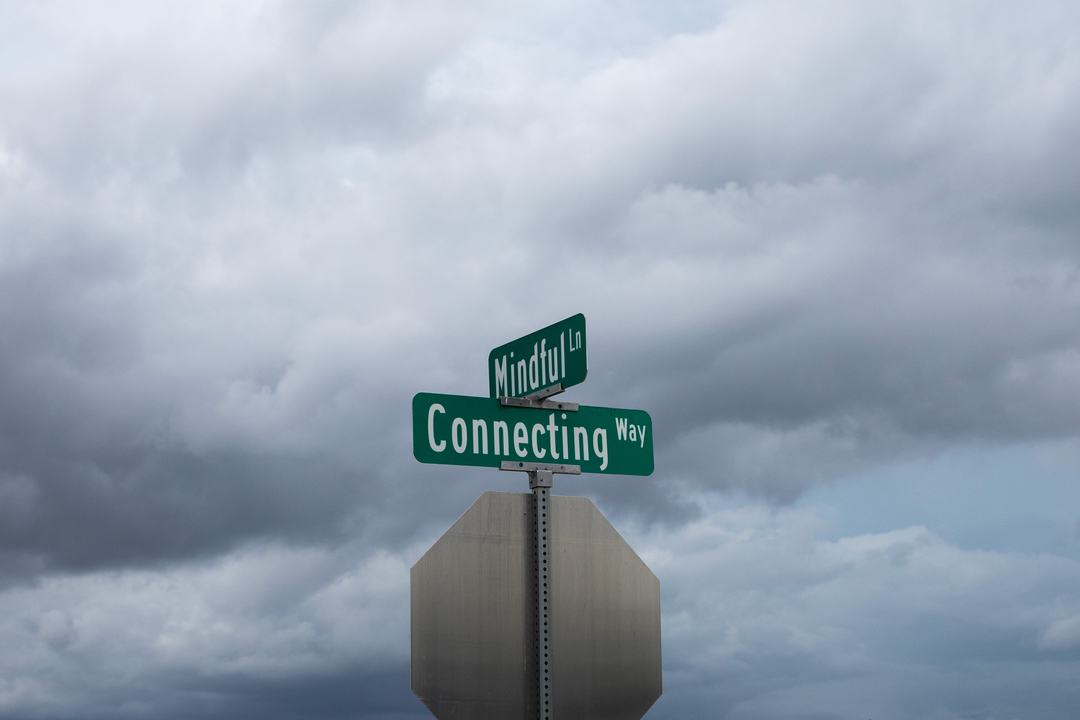
A street sign in Indigo, a master-planned community outside of Houston that tries to foster connection, on Sept. 17, 2026. Developers of master-planned communities see fear of social isolation and desire for friends as a business opportunity. (Antranik Tavitian/The New York Times)
Kiara Aponte and Samir Husain loved everything about the Tudor-style house they bought in a leafy Houston suburb. But beyond their property line, something was missing.
There were sidewalks, but nobody walked on them. They identified their neighbors not by name but by the car in the driveway. No one ever popped over to borrow eggs.
“There weren’t a whole lot of interactions, period,” Aponte said.
“Just like a smile, wave and move on type of type of situation,” Husain added.
In 2024, two years after paying $280,000 and moving in, they left in search of better neighbors.
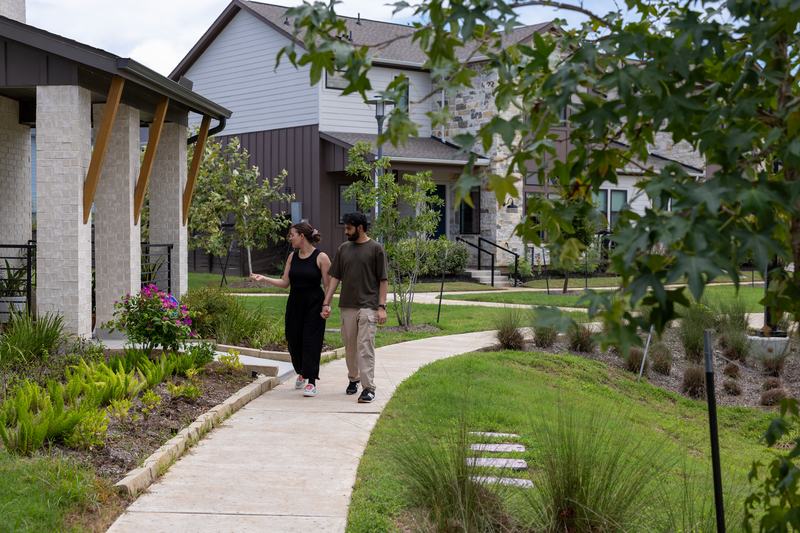
The couple told the story of how they fell out of love with their house during a lunch at Della Coffee & Wine, the social hub of a new master-planned development called Indigo. Indigo sits about 30 miles from downtown Houston and about a 15-minute drive from their old house. Despite being in the suburbs, the development has a village feel. Aponte and Husain live along a car-free parkway with a view of sidewalk plantings and strolling neighbors instead of a wall of cars.
Housing developments reflect the times in which they are built. Developers erect gates when people are worried about crime, market big kitchens when land is cheap, and turn dining rooms into offices when the world is mired in a pandemic. Today, with social isolation a major preoccupation, consultants are using phrases like “emotional reliability” and “community as an amenity” to describe buyers’ desires for places that foster connection with neighbors.
In California, the community of Silverwood asks its residents to sign a kindness pledge. A development in Utah called Firefly markets its slow streets and bountiful parks as an alternative to screen time. Developers are trading empty clubhouses for working farms and marketing halls designed around neighborly collisions.
As you pull up to Indigo from the highway, signs that advertise homes selling in the low $300,000s are broken up by messages like “Know Your Neighbors.” About 275 homes of a planned 692 have been built along streets with names like Kindred Way.
Aponte and Husain moved to Amity Lane and now live in a freshly completed duplex with a strip of grass for a backyard. By the numbers, it is a step down from the Tudor. The space is smaller, and they share a wall.
Husain said it was worth it, “because everything has been pleasant and happy.”
As home prices and borrowing costs have exploded, selling the American dream increasingly means selling less. To counter the diminished expectations, exurban communities are playing up urban features like walkability and adding amenities like brew pubs with adjoined parks so parents can gather without arranging for a sitter.
The underlying message is that while you might not get a lot of house, you’ll get a suburban approximation of the no-longer-affordable hipster urban neighborhood. In doing so, developers are inverting the ideas of privacy and abundant space that had once been the suburban ideals and repackaging them as antidotes to suburban ills like loneliness and isolation.
“You spend most of your time in the car, your kids don’t see other kids because it’s unsafe to walk — it’s brutal,” said Teri Slavik-Tsuyuki, a consultant who helps developers design new communities, describing her view of traditional suburban living. “That is what we’ve created, and developers have started to realize that it’s their problem to solve.”
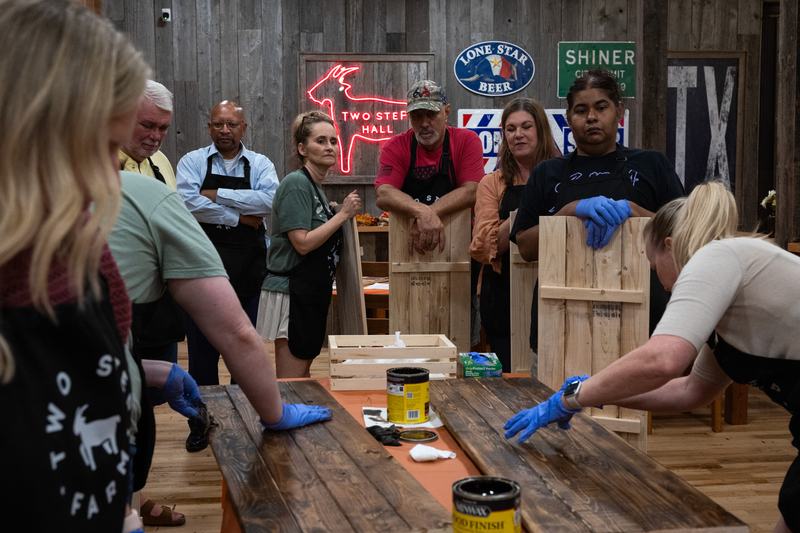
The instruments of this transition are master-planned communities, roughly defined as town- or neighborhood-size projects in which a single entity controls the infrastructure and community vision. The homeowners associations that run these projects have long operated as mini governments that handle services like landscaping and trash collection. Increasingly, they also emphasize “lifestyle” programming run by full-time coordinators who plan events and help neighbors make friends.
“It used to be that local institutions were largely responsible for the creation of community, and then for a variety of reasons — suburbanization, technology — we broke apart all those connections,” said Todd Hornback, CEO of Cohere, a Phoenix company that manages HOAs, including the one at Indigo. “Community is no longer created organically in new places. It has to be designed and practiced.”
Cohere organizes Fourth of July parades and buys snacks for its residents’ game nights. One of its properties has a nearby neighbor deliver a freshly baked pie to new occupants. Instead of career property managers, Hornback said the company tried to recruit HOA managers from nonprofits like the Boys & Girls Club and had recently started hiring pastors.
Hornback pitches this as good business: Word of mouth from early residents builds demand that allows developers to raise prices as they build for later phases. When Cohere asks residents what they like about a particular community, Hornback said they rarely spoke about their home and instead listed things like “small-town feel.” In business terms, he calls this “ROI” — return on investment — “of belonging.”
Indigo’s layout borrows from the new urbanist movement that preaches walkable neighborhoods with a variety of housing types clustered together. When fully built out, the project will have everything from a 66-unit apartment complex with 500-square-foot rentals to 6,000-square-foot houses with price tags above $2 million. Building types aren’t grouped together — the plans call for 1,000-square-foot cottages to sit across the street from the biggest homes — and the whole thing is oriented around a Main Street-style commercial center with ground-floor storefronts and apartments on top.
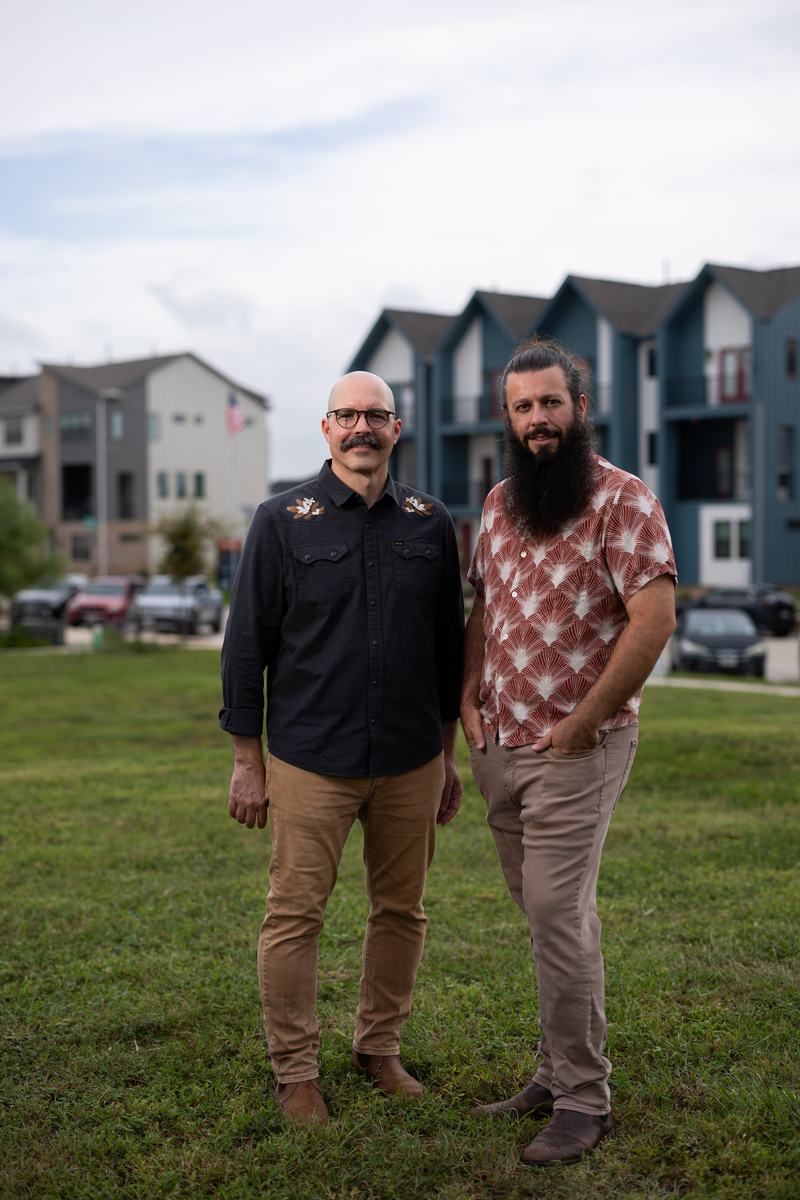
Indigo’s developers, Scott Snodgrass and Clayton Garrett, said they had also tried to strip their homeowners association of many of the rules that made suburbia feel so bland. While many developments prohibit people from having businesses in their homes, for instance, Indigo encourages them.
In comparison with nearby developments and their large lots and cul-de-sacs, Indigo seems teleported from a random downtown. That discordance appeals to buyers like Helen Clancy, who moved to Indigo last November. Clancy, 49, was living in a rental apartment in Montrose, a rapidly gentrifying Houston neighborhood where she had been priced out from buying. Indigo felt like a good approximation of that same urban feel, so she bought a 1,600-square-foot home for $360,000.
Clancy excitedly recounted, with jazz hands, that she had recently told a neighbor that if she ever wanted to hang out she should just pop over — and the neighbor actually did! “Somebody rang my doorbell for an unexpected visit,” she said, “and we talked about books.”
Indigo, while walkable, has none of the history or tradition of most neighborhoods developed before cars. And so Snodgrass and Garrett hired a consultant to create a “belonging framework” (town meetings have to include childcare; resident clubs cannot limit membership). An outdoor games company devised an activity called IndiGolf that encourages residents to pair up and walk around solving a series of puzzles and challenges. (Example: Use nonverbal communication to find a marked rock in the Zen garden.)
Indigo, because it leans so heavily into the friendliness vibe, seems to have attracted people in life transitions — divorced, widowed, just starting families — where making friends can be hard.
The initial marketing for master-planned communities can be self-fulfilling. “By advertising that they’re into sociability and having some cues, the social crowd will move there,” said Ann Forsyth, a professor of urban planning at Harvard and co-director of the school’s New Towns Initiative.
c.2026 The New York Times Company
This New York Times article was legally licensed by AdvisorStream