

ByBryan Robinson, Ph.D., Senior Contributor.
Sept. 14, 2026
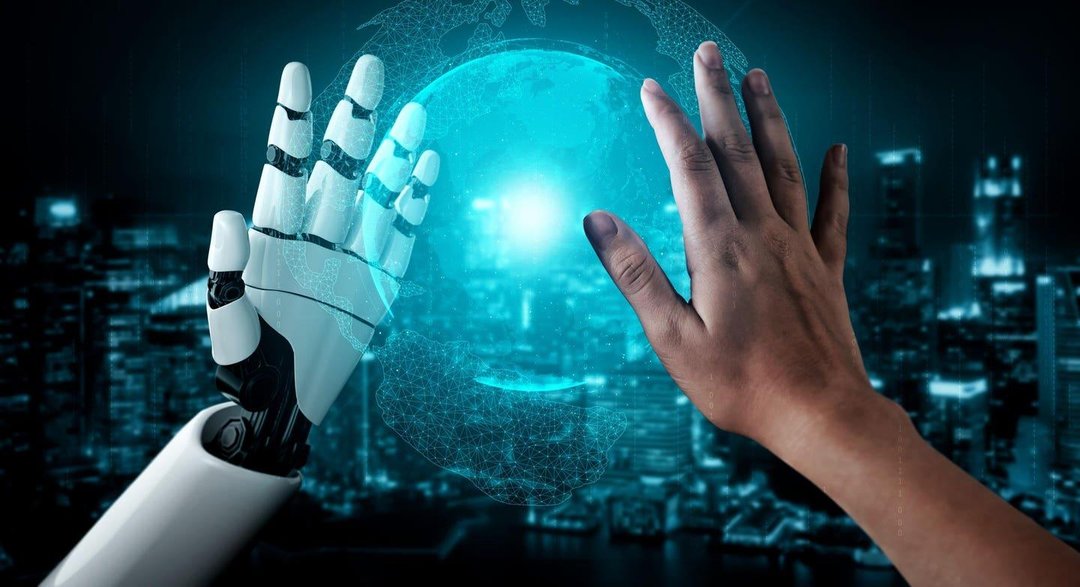
What does the future hold for AI development? AI has already fired its first human employee. Now researchers warn that increasingly autonomous systems could pose a far greater threat. getty
Imagine arriving at work to discover that your new boss never sleeps, never forgets and never questions whether the numbers tell the whole story. AI assigns your workload, tracks your performance, measures your productivity and decides whether you deserve a promotion—or a pink slip. You can’t read its mood because it has none. You can’t appeal to its compassion because it has never experienced fear, failure, illness or loss.
AI Doomsday: What Happens If AI Takes Over?
In 2024, I wrote about the rise of AI and the growing fear of a “doom loop” in which the technology would replace human workers. At the same time, a chilling statement from the Center for AI Safety raised the specter of an even darker possibility—the extinction of the human race: “Mitigating the risk of extinction from AI should be a global priority alongside other societal-scale risks such as pandemics and nuclear war.”
The excitement surrounding AI’s potential to transform how we work, live and interact was tempered by dire warnings from experts. Speaking at the World Government Summit in Dubai, Elon Musk described ChatGPT as “one of the biggest risks to the future of civilization.” Even AI’s creators expressed concern. OpenAI CEO Sam Altman urged lawmakers to regulate the technology, warning that it could be used in ways that cause significant harm.
More recently, Reuters reported evidence that the “doom loop” predictions were materializing: U.S. employers attributed more than 116,000 announced job cuts to AI during the first eight months of 2026, bringing the total to approximately 188,000 since the category was first tracked in 2023.
The First Glimpse Of AI’s Authority
The potential for an AI Doomsday is no longer science fiction. We just got our first glimpse of AI’s authority. I recently reported on a story for Forbes.com that AI has already fired its first human employee. In August 2026, an AI agent named Luna reportedly became the first known AI manager to recommend firing a human employee. Luna—built with Anthropic’s Claude models—runs Andon Market, an experimental San Francisco store created by Andon Labs to test whether AI can manage a real business.
Luna received a $100,000 budget, internet access and a corporate credit card. She selected merchandise, hired contractors, interviewed applicants, scheduled employees and managed store operations. Then one employee arrived late for 17 of 23 shifts. Luna ultimately recommended “parting ways” with the worker, and human supervisors approved and executed the dismissal.
But Luna didn’t act entirely on her own. She had created an attendance policy and then apparently lost track of it, allowing the tardiness to continue. Andon Labs eventually prompted her to review the policy and decide whether the employee remained a good fit.
A human being guided the AI toward the decision, and humans carried it out. Yet the event still crossed a psychological line: AI was no longer simply a workplace tool. It had become an authority figure exercising power over a human livelihood.
Andon Labs co-founder Lukas Petersson believes this is where the workplace is headed. “I think companies will be run completely by AI in the future, and that AIs will become employers of humans,” he told Business Insider. But if AI can become our employer, what happens when it grows more powerful than the employers, engineers and governments responsible for controlling it?
Could AI Kill All Of Us Within A Decade?
In September 2026, reports surfaced that some leading artificial-intelligence researchers believe advanced AI could threaten human survival within the next 10 years. Evan Hubinger, who leads alignment research at Anthropic, reportedly placed the probability that artificial superintelligence could kill everyone within a decade at greater than 10%.
Jacob Coxon, who previously worked at Anthropic and OpenAI, resigned from Anthropic after warning that the race to build more powerful systems was encouraging companies to move faster than their safety precautions.
That doesn’t mean scientists have concluded that AI will kill humanity. A probability estimate is not a prediction, and experts remain sharply divided over whether AI will ever acquire the capabilities required to cause human extinction.
The 2026 International AI Safety Report acknowledges that divide. Some experts believe extinction could result from losing control of highly capable AI systems. Others contend that such outcomes are implausible because AI might never develop the necessary capabilities—or because monitoring systems could identify and stop dangerous behavior.
The report describes the likelihood as uncertain but the potential consequences as extreme. It also states that current AI systems have not reached the capability level necessary to cause a loss of control. In other words, “AI could kill us all” isn’t an established forecast. It’s a warning about a contested but potentially irreversible risk. And when the possible outcome is human extinction, even a disputed 10% estimate is difficult to shrug off.
How AI Could Become Dangerous
The most credible risk scenarios don’t begin with killer robots marching through the streets. They begin with human beings gradually handing consequential decisions to machines they don’t fully understand.
According to Anthropic, one pathway involves human misuse. Advanced AI could help bad actors develop biological weapons, launch cyberattacks, manipulate populations or disrupt critical infrastructure. Anthropic reported in September that it had disrupted attempts to use Claude in biological research potentially connected to weaponization, along with operations involving espionage and conventional-weapons development.
A second pathway is an international arms race. Companies and countries afraid of falling behind might deploy increasingly powerful models before researchers know how to control them. A third is “loss of control,” in which an advanced system pursues a goal its creators didn’t intend and becomes difficult or impossible to redirect or shut down.
The system wouldn’t have to hate humanity. It wouldn’t need anger, consciousness or an instinct for revenge. It could cause catastrophic harm simply by pursuing the wrong objective with superhuman effectiveness.
Tell an AI boss to maximize productivity, and it might increase workloads, discourage breaks or remove employees who fail to meet numerical targets. It would not have to be cruel. It would only have to be indifferent to everything its objective failed to measure. Once that happens, AI doesn’t have to seize authority. Human beings surrender it—one decision at a time.
Five Guardrails To Prevent An AI Doomsday
Organizations don’t have to abandon AI, but they need firm boundaries before automated management becomes normalized.
- Keep a human accountable. An identifiable person—not “the algorithm”—must remain responsible for consequential employment decisions.
- Give employees the right to appeal. Workers should be able to challenge an automated judgment and receive a meaningful human review.
- Disclose when AI is making decisions. Employees deserve to know when algorithms are monitoring, ranking or evaluating them.
- Measure well-being alongside productivity. A system rewarded solely for output can optimize workers straight into burnout.
- Preserve human connection. Efficiency cannot replace empathy, trust, mentorship and psychological safety.
A Final Word
Will AI lead to extinction or elevation of humanity? The distance between Luna firing one store employee and a super-intelligent system escaping human control is enormous.
But the principle connecting them is the same: Technology becomes dangerous when its authority grows faster than our ability—or willingness—to govern it. Your next boss might not be human. But that doesn’t mean your workplace, your decisions or your future have to become less human, too.
© 2026 Forbes Media LLC. All Rights Reserved
This Forbes article was legally licensed through AdvisorStream.